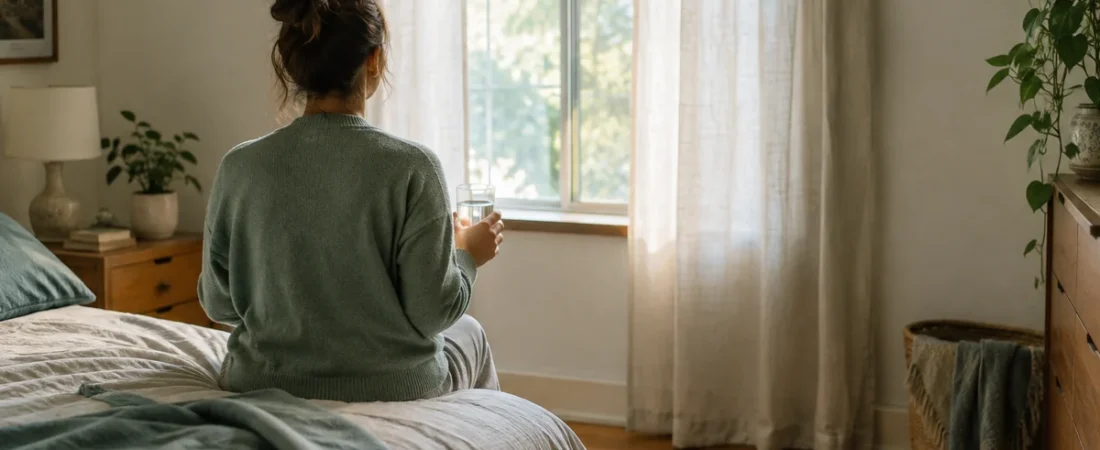
“Hangxiety” is the anxiety, dread or guilt many people feel the day after drinking. You may wake up with a racing heart, replay everything you said, and feel on edge for hours. It’s not a medical term, but it’s a real and common experience with understandable causes. Here’s why it happens, how to ease it, and when it’s a sign to look more closely at drinking or anxiety.
You don’t have to handle anxiety alone.
Online-Therapy.com connects you with a licensed therapist and a structured CBT program you can follow from home. Use code THERAPY20 for 20% off your first month.
See how it works for anxiety →Sponsored link · Cancel anytime · Not an emergency service — in crisis, call or text 988
Why drinking causes next-day anxiety
- Brain chemistry rebound: alcohol boosts calming signals (GABA) and dampens excitatory ones (glutamate). As it wears off, the brain swings the other way, leaving you jittery and tense.
- Poor sleep: alcohol disrupts the second half of the night, so you wake unrested and more reactive.
- Physical symptoms: dehydration, low blood sugar, a fast heartbeat and nausea mimic anxiety, and the body reads them as threat.
- Memory gaps and social worry: not remembering what you said fuels rumination and guilt.
- Pre-existing anxiety: people who are more anxious or shy may experience stronger hangxiety, and may also drink to ease social anxiety.
How to ease hangxiety
- Hydrate and eat something with protein and complex carbs.
- Slow your breathing: inhale for 4, exhale for 6, for a few minutes.
- Get outside for a short walk and daylight.
- Avoid more alcohol (“hair of the dog”), which delays the rebound.
- Limit caffeine if it makes you jittery.
- Name it: “This is a chemical rebound, not proof I did something terrible.”
- Postpone reviewing messages or social media until you feel steadier.
Preventing it next time
- Set a drink limit beforehand and alternate with water.
- Eat before and while drinking.
- Notice if you drink to manage social nerves; that’s worth addressing directly (see social anxiety).
- Try alcohol-free days or weeks and see how your mood and sleep change.
You don’t have to handle anxiety alone.
Online-Therapy.com connects you with a licensed therapist and a structured CBT program you can follow from home. Use code THERAPY20 for 20% off your first month.
See how it works for anxiety →Sponsored link · Cancel anytime · Not an emergency service — in crisis, call or text 988
When hangxiety is a warning sign
Consider getting support if you regularly drink to cope with anxiety, feel unable to cut back, or if anxiety stays high on days you don’t drink. Anxiety and alcohol use often feed each other, and both are treatable. The SAMHSA National Helpline (1-800-662-4357) is free, confidential and available 24/7 for substance use questions. For ongoing anxiety, therapy such as CBT can help; see our anxiety guide.
Frequently asked questions
How long does hangxiety last?
Often several hours to a day, as alcohol leaves your system and sleep recovers. It can last longer after heavy drinking.
Why do I feel guilty after drinking?
A mix of brain chemistry, poor sleep and uncertainty about what happened; the feeling is often stronger than the facts.
Is hangxiety a sign of an anxiety disorder?
Not necessarily, but if anxiety is frequent even without alcohol, it’s worth getting assessed.
Does hangxiety get worse with age?
Many people report it does, partly because hangovers and sleep disruption feel stronger.
You don’t have to handle anxiety alone.
Online-Therapy.com connects you with a licensed therapist and a structured CBT program you can follow from home. Use code THERAPY20 for 20% off your first month.
See how it works for anxiety →Sponsored link · Cancel anytime · Not an emergency service — in crisis, call or text 988
Sources
- NIAAA: Hangovers
- NIMH: Anxiety Disorders
- SAMHSA National Helpline
- SAMHSA: 988 Suicide & Crisis Lifeline