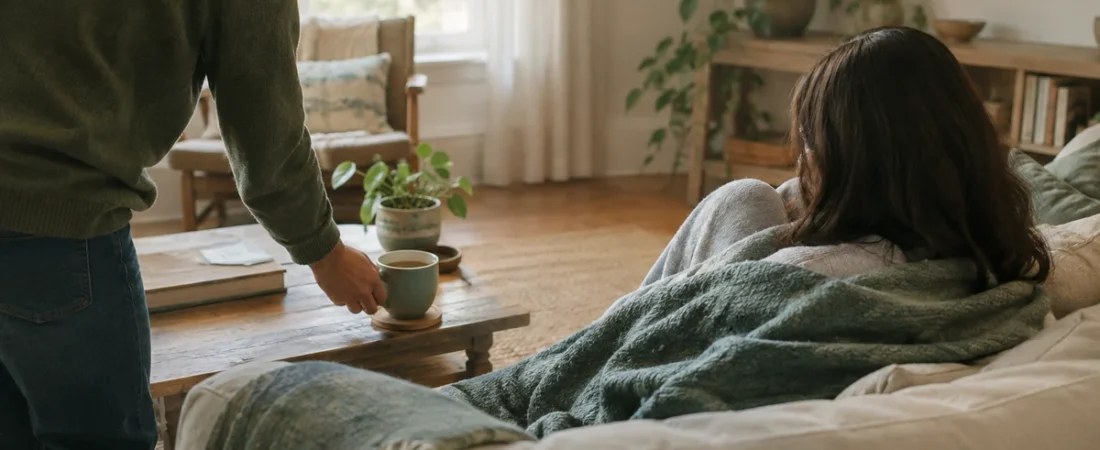
Watching a partner struggle with depression is hard. You may feel helpless, shut out, frustrated or worried, and unsure what to say. You can’t cure their depression, but you can make a real difference: by understanding it, supporting treatment, and looking after yourself so the relationship can weather it.
Want to work on it together?
Online-Therapy.com’s couples plan includes a weekly live session for both partners plus messaging. Use code THERAPY20 for 20% off your first month.
Explore online couples therapy →Sponsored link · Cancel anytime · Not an emergency service — in crisis, call or text 988
Recognize what depression looks like
Depression can show up as sadness, but also as irritability, withdrawal, low libido, fatigue, sleeping too much or too little, and losing interest in things you used to share. It’s an illness, not a choice or a verdict on the relationship. Learn the signs of depression in adults.
What to say (and what not to)
| Helpful | Less helpful |
|---|---|
| “I’ve noticed you seem down. I’m here.” | “Just think positive.” |
| “You don’t have to explain, I’m with you.” | “Other people have it worse.” |
| “Would it help if I came with you to an appointment?” | “Snap out of it.” |
| “What feels hardest right now?” | Taking withdrawal personally |
Practical ways to help
- Encourage professional help: offer to help find a therapist or book a doctor’s appointment.
- Reduce small burdens: share tasks that feel overwhelming to them right now.
- Invite gently: a short walk, a meal together, without pressure.
- Keep routines: regular meals and sleep help both of you.
- Notice progress: small steps count.
- Be patient: treatment often takes weeks to show effects.
Want to work on it together?
Online-Therapy.com’s couples plan includes a weekly live session for both partners plus messaging. Use code THERAPY20 for 20% off your first month.
Explore online couples therapy →Sponsored link · Cancel anytime · Not an emergency service — in crisis, call or text 988
Take care of yourself too
- Keep your own friendships, activities and rest.
- Set boundaries: supporting doesn’t mean accepting mistreatment.
- Talk to someone yourself, a friend or a therapist.
- Remember you’re a partner, not their therapist.
Depression strains relationships. Individual therapy for your partner and couples therapy for both of you can work together.
Frequently asked questions
Should I leave my depressed partner?
That’s a personal decision. Depression is treatable, and many couples come through it. If the relationship involves abuse or you’re at the end of your resources, prioritize your safety and wellbeing and seek support.
How do I get my partner to see a therapist?
Express concern, connect it to what they care about, and offer practical help. Online therapy can feel like an easier first step.
Why does my depressed partner push me away?
Withdrawal is a common symptom of depression, not necessarily a sign about the relationship.
Can couples therapy help with depression?
It can help with the strain on the relationship and complement individual treatment.
Want to work on it together?
Online-Therapy.com’s couples plan includes a weekly live session for both partners plus messaging. Use code THERAPY20 for 20% off your first month.
Explore online couples therapy →Sponsored link · Cancel anytime · Not an emergency service — in crisis, call or text 988
Sources
- NIMH: Depression
- American Psychological Association: Couples therapy
- NIMH: Caring for Your Mental Health
- SAMHSA: 988 Suicide & Crisis Lifeline