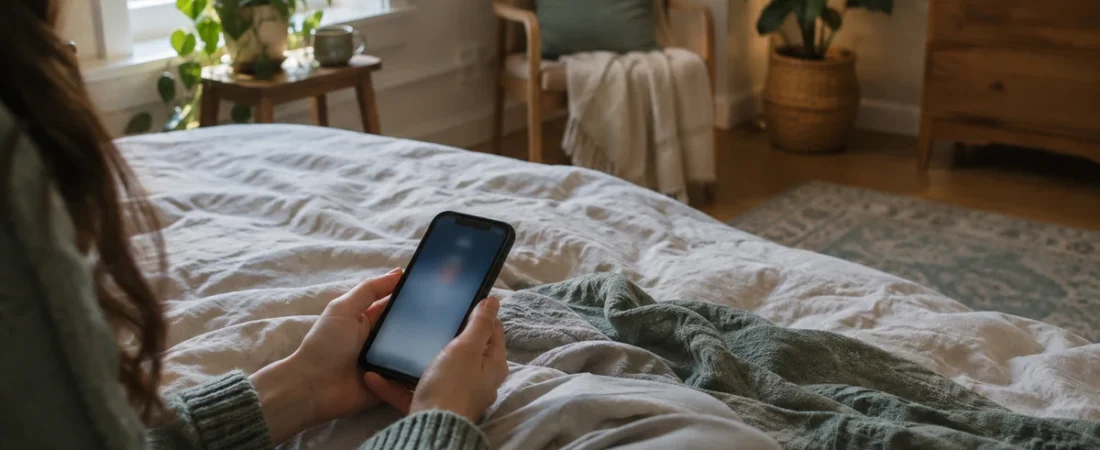
Anxious attachment (also called anxious-preoccupied attachment) is a pattern of relating in which closeness feels essential but never quite secure. You may crave reassurance, read silence as rejection, and feel flooded with worry when a partner seems distant. Attachment styles come from attachment theory, first developed by the British psychiatrist Bowlby to describe children’s bonds and later applied to adult relationships. A style is not a diagnosis, and it can change.
Ready to talk to a licensed therapist?
Online-Therapy.com pairs you with a licensed therapist, weekly live sessions by video, voice or text (Standard plan and up), and a step-by-step CBT program. Use code THERAPY20 for 20% off your first month.
Get started with Online-Therapy.com →Sponsored link · Cancel anytime · Not an emergency service — in crisis, call or text 988
Signs of anxious attachment
- You worry a partner will lose interest or leave.
- A delayed text or change in tone can send you spiraling.
- You seek frequent reassurance, then doubt it.
- You find it hard to be alone or to set boundaries for fear of losing the relationship.
- You may protest when anxious: calling repeatedly, picking fights, or withdrawing to get a reaction.
- You often feel more invested than the other person.
The four adult attachment styles
| Style | Core belief | Typical pattern |
|---|---|---|
| Secure | I’m worthy of love; others are generally reliable | Comfortable with closeness and independence |
| Anxious | I need closeness to feel OK; others may leave | Seeks reassurance, fears abandonment |
| Avoidant | I’m better off relying on myself | Keeps distance, uncomfortable with dependence |
| Fearful-avoidant (disorganized) | I want closeness but it feels unsafe | Pushes and pulls |
Anxious and avoidant partners often find each other, and each one’s coping triggers the other’s fear: the anxious partner pursues, the avoidant partner withdraws. Recognizing this “pursue-withdraw” cycle is a first step to stepping out of it.
Where it comes from
Early experiences with caregivers who were loving but inconsistent can teach a child to stay on high alert for signs of connection. Later relationships, breakups or betrayals also shape attachment. Temperament plays a part. None of this is anyone’s “fault”, and adults can build what researchers call earned security.
Ready to talk to a licensed therapist?
Online-Therapy.com pairs you with a licensed therapist, weekly live sessions by video, voice or text (Standard plan and up), and a step-by-step CBT program. Use code THERAPY20 for 20% off your first month.
Get started with Online-Therapy.com →Sponsored link · Cancel anytime · Not an emergency service — in crisis, call or text 988
How to heal anxious attachment
- Name the alarm: “My attachment system is activated” instead of “They’re leaving me.”
- Self-soothe first: slow breathing, a walk, or writing before you text.
- Ask directly, once: share a need clearly (“I feel uneasy when plans change last minute; can we check in?”) rather than testing.
- Build a life outside the relationship: friendships, interests, routines.
- Choose consistent partners: notice who reliably shows up.
- Therapy: CBT, schema therapy and emotionally focused approaches can help you understand triggers and practice new responses; couples therapy can help partners break the pursue-withdraw cycle together.
Related: relationship anxiety, relationship OCD, people pleasing, and online couples therapy.
Frequently asked questions
Can anxious attachment change?
Yes. Attachment patterns can shift with self-awareness, stable relationships and therapy.
Is anxious attachment a mental illness?
No. It’s a relational pattern, not a diagnosis, though it can overlap with anxiety.
What triggers anxious attachment?
Signs of distance or unpredictability: slow replies, changed plans, a partner’s mood shift.
What’s the best therapy for anxious attachment?
Approaches that work on emotions and relationship patterns, such as CBT, schema therapy and emotionally focused therapy; couples therapy if you’re in a relationship.
Ready to talk to a licensed therapist?
Online-Therapy.com pairs you with a licensed therapist, weekly live sessions by video, voice or text (Standard plan and up), and a step-by-step CBT program. Use code THERAPY20 for 20% off your first month.
Get started with Online-Therapy.com →Sponsored link · Cancel anytime · Not an emergency service — in crisis, call or text 988
Sources
- APA Dictionary of Psychology: Attachment theory
- American Psychological Association: Couples therapy
- NIMH: Anxiety Disorders
- SAMHSA: 988 Suicide & Crisis Lifeline