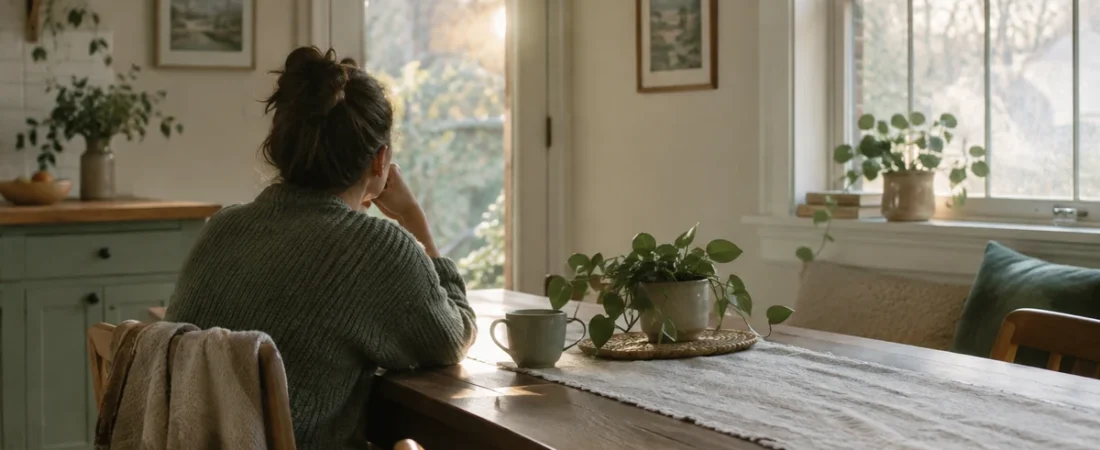
Dysthymia, now called persistent depressive disorder (PDD), is a long-lasting form of depression: a low, heavy mood on most days for at least two years in adults (one year in children and teens). Symptoms are often less intense than in a major depressive episode, but because they last so long, people start to believe “this is just who I am.” It isn’t. PDD is a recognized, treatable condition.
Wondering if it’s depression?
Take Online-Therapy.com’s free depression test. A few quick questions — a screening, not a diagnosis.
Take the free depression test →Sponsored link · Cancel anytime · Not an emergency service — in crisis, call or text 988
Symptoms of persistent depressive disorder
Along with a depressed mood most of the day, more days than not, PDD involves at least two of these:
- Poor appetite or overeating
- Sleeping too little or too much
- Low energy or fatigue
- Low self-esteem
- Poor concentration or difficulty making decisions
- Feelings of hopelessness
Symptoms don’t disappear for more than two months at a time. Many people with PDD keep working and functioning, which is why it is easy to overlook, like smiling depression.
Dysthymia vs major depression
| Persistent depressive disorder (dysthymia) | Major depressive disorder | |
|---|---|---|
| Duration | 2+ years (adults) | At least 2 weeks per episode |
| Intensity | Often milder but chronic | Often more severe |
| Pattern | Continuous low mood | Episodes, which can recur |
| Overlap | Major depressive episodes can occur on top of PDD (sometimes called “double depression”) |
Both are serious. Chronic low-grade depression can affect careers, relationships and health as much as acute episodes. More on the core signs in signs of depression in adults and anhedonia.
Causes and risk factors
- Family history of depression
- Long-term stress, trauma or difficult early experiences
- Other mental health conditions, especially anxiety
- Chronic medical conditions
- Personality factors such as high self-criticism
Low mood lasting weeks?
Online-Therapy.com pairs you with a licensed therapist and a step-by-step CBT program for depression. Use code THERAPY20 for 20% off your first month.
See how it works for depression →Sponsored link · Cancel anytime · Not an emergency service — in crisis, call or text 988
Treatment
PDD responds to the same main approaches as other forms of depression:
- Psychotherapy: CBT, interpersonal therapy, and approaches developed for chronic depression help challenge long-held beliefs (“I’ll always feel this way”) and rebuild activity and relationships.
- Medication: antidepressants are sometimes used, often combined with therapy. Discuss with a doctor or psychiatrist.
- Combined treatment: for chronic depression, combining therapy and medication is often recommended.
- Lifestyle supports: regular sleep, physical activity, daylight, social contact, and limiting alcohol.
Because PDD has often been present for years, improvement may be gradual. Many people describe the change as rediscovering what “normal” feels like.
Self-help that supports treatment
- Track mood weekly to notice slow progress.
- Use CBT exercises such as behavioral activation and thought records.
- Set small, specific goals rather than waiting to feel motivated.
- Reconnect with one or two people regularly; isolation deepens low mood.
- Watch for “it’s just my personality” thinking: notice it, and question it.
Getting help
If low mood has been your baseline for years, it’s worth an assessment, even if you function well. A free PHQ-9 depression test can be a starting point. Online therapy can be a practical way to start; see best online therapy for depression.
How PDD is diagnosed
A doctor or mental health professional will ask about your mood history, often going back years, and use questionnaires such as the PHQ-9. They’ll check for other causes (thyroid problems, medications, substance use) and for related conditions like anxiety. Because many people with PDD have felt low for so long, it helps to bring examples: what a typical week looks like, what you’ve stopped doing, how others describe you.
Living with persistent depressive disorder
| Area | What often helps |
|---|---|
| Work | Breaking tasks into small steps; realistic deadlines; talking with HR about accommodations if needed |
| Relationships | Telling one trusted person what you’re dealing with; couples support if strain builds |
| Energy | Regular sleep, short walks, consistent meal times |
| Self-talk | Noticing “I’ve always been like this” and testing it with a therapist |
Myths about dysthymia
- “It’s just my personality.” PDD is a treatable condition, not a fixed trait.
- “It’s too mild to treat.” Its length makes it worth treating; untreated, it can raise the risk of major depression.
- “Medication is the only option.” Psychotherapy is a core treatment, alone or combined.
- “If I can work, I’m fine.” Many people with PDD function outwardly while struggling inside.
Frequently asked questions
Is dysthymia the same as persistent depressive disorder?
Yes. In the DSM-5, dysthymia and chronic major depression were combined under the name persistent depressive disorder.
Can dysthymia go away?
Yes. With treatment, many people improve significantly, though it may take time.
Is dysthymia a mild depression?
Symptoms may be milder than in a major episode, but its long duration can make its impact substantial.
What is double depression?
A major depressive episode occurring on top of persistent depressive disorder.
Low mood lasting weeks?
Online-Therapy.com pairs you with a licensed therapist and a step-by-step CBT program for depression. Use code THERAPY20 for 20% off your first month.
See how it works for depression →Sponsored link · Cancel anytime · Not an emergency service — in crisis, call or text 988
Sources
- Cleveland Clinic: Persistent Depressive Disorder (PDD)
- NIMH: Depression
- American Psychological Association: Cognitive behavioral therapy
- SAMHSA: 988 Suicide & Crisis Lifeline