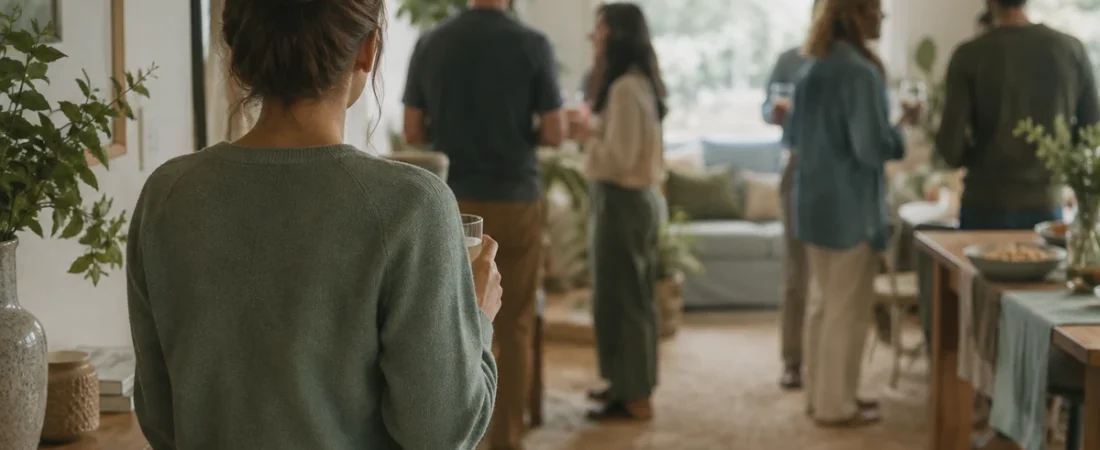
Do you dread speaking up, meeting new people or being watched? This self-check walks you through the kinds of questions social anxiety screening tools ask, how to interpret your answers, and what to do next. It isn’t a diagnosis; only a qualified clinician can diagnose social anxiety disorder.
Ready to feel less on edge around people?
CBT is one of the most studied treatments for social anxiety. Online-Therapy.com offers a program with a licensed therapist you can start from home. Use code THERAPY20 for 20% off your first month.
Explore online help for social anxiety →Sponsored link · Cancel anytime · Not an emergency service — in crisis, call or text 988
Social anxiety self-check
Validated questionnaires such as the Social Phobia Inventory (SPIN) and the Liebowitz Social Anxiety Scale ask how much fear and avoidance you feel in situations like these. Think about the past month:
- Talking to people you don’t know well.
- Speaking in meetings or class.
- Eating, drinking or writing while others watch.
- Making phone calls (see phone anxiety).
- Being the center of attention, or giving a presentation.
- Disagreeing with someone or returning something to a store.
- Going to parties or social events.
- Worrying for days before, or replaying conversations afterward.
- Fearing that others will notice you blush, sweat or shake.
How to read your answers
Some nervousness in these situations is normal. Social anxiety disorder is more likely when the fear is intense, out of proportion, lasts six months or more, leads you to avoid situations or endure them with great distress, and interferes with work, school or relationships. If several items cause strong fear or avoidance, consider talking to a professional.
Social anxiety or shyness?
| Shyness | Social anxiety disorder |
|---|---|
| Warms up with time | Fear persists or grows |
| Mild discomfort | Intense fear of judgment, physical symptoms |
| Doesn’t limit your life much | Avoidance affects work, school, relationships |
Ready to feel less on edge around people?
CBT is one of the most studied treatments for social anxiety. Online-Therapy.com offers a program with a licensed therapist you can start from home. Use code THERAPY20 for 20% off your first month.
Explore online help for social anxiety →Sponsored link · Cancel anytime · Not an emergency service — in crisis, call or text 988
What to do next
- Learn about the condition: social anxiety signs and treatment.
- Try small steps: one brief interaction you’d normally avoid each day.
- Watch out for safety behaviors (rehearsing, avoiding eye contact), which keep anxiety going.
- Consider CBT, the most studied treatment for social anxiety, in person or online.
- If anxiety is also general, try the GAD-7 anxiety test.
Frequently asked questions
Is there an accurate social anxiety test?
Tools like the SPIN and Liebowitz scale are well-studied screening measures, but a clinician’s assessment is needed for a diagnosis.
How common is social anxiety disorder?
NIMH estimates about 7% of U.S. adults had social anxiety disorder in the past year.
Can social anxiety go away?
With CBT and gradual exposure, many people improve significantly.
Can I get therapy for social anxiety online?
Yes, and many people with social anxiety find it an easier first step.
Ready to feel less on edge around people?
CBT is one of the most studied treatments for social anxiety. Online-Therapy.com offers a program with a licensed therapist you can start from home. Use code THERAPY20 for 20% off your first month.
Explore online help for social anxiety →Sponsored link · Cancel anytime · Not an emergency service — in crisis, call or text 988
Sources
- NIMH: Social Anxiety Disorder — More Than Just Shyness
- NIMH: Anxiety Disorders
- American Psychological Association: Cognitive behavioral therapy
- SAMHSA: 988 Suicide & Crisis Lifeline