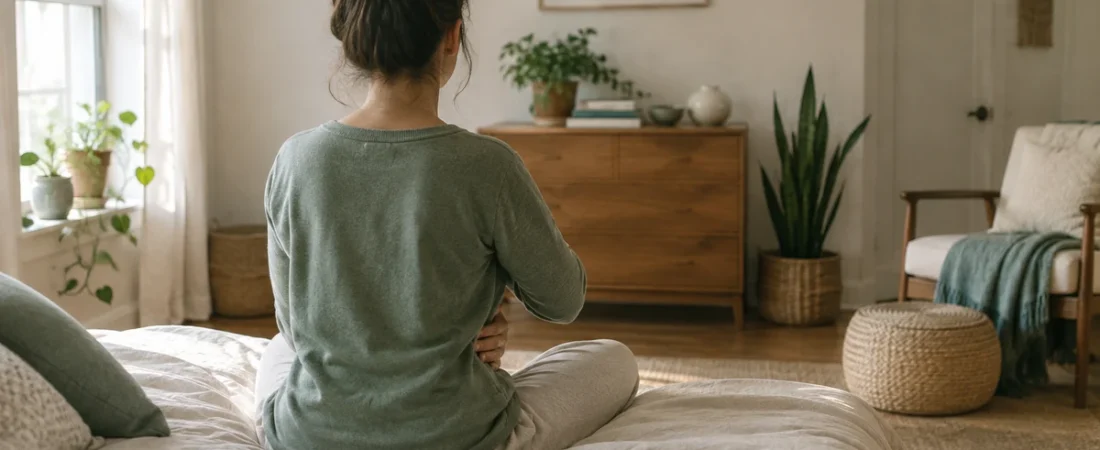
Breathing is one of the few parts of the stress response you can control directly. Slow breathing, especially with a longer exhale, signals the body to shift out of “fight or flight.” Below are seven breathing exercises for anxiety, how to do each one, when it’s most useful, and what research says. They take one to five minutes and need no equipment.
You don’t have to handle anxiety alone.
Online-Therapy.com connects you with a licensed therapist and a structured CBT program you can follow from home. Use code THERAPY20 for 20% off your first month.
See how it works for anxiety →Sponsored link · Cancel anytime · Not an emergency service — in crisis, call or text 988
Why breathing helps anxiety
When you’re anxious, breathing often becomes fast and shallow, which can cause dizziness, tingling and a racing heart, sensations that feed more anxiety. Slowing the breath, and especially lengthening the exhale, engages the parasympathetic (“rest and digest”) nervous system. Harvard Health describes breath control as a way to counter the stress response, and the NHS recommends simple breathing exercises for stress.
The 7 exercises
1. Extended exhale (4-6 breathing)
Breathe in through your nose for 4 seconds, out through your mouth for 6. Repeat for 2-3 minutes. The easiest place to start, and discreet enough for meetings.
2. Box breathing
Inhale 4 seconds, hold 4, exhale 4, hold 4. Repeat 4-6 rounds. The counting itself focuses attention. If holding your breath makes you feel worse, skip the holds.
3. Cyclic sighing (physiological sigh)
Inhale through the nose, then take a second short inhale on top to fully expand the lungs, then exhale slowly and completely through the mouth. Repeat for a few minutes. In a 2023 Stanford study (Balban et al., Cell Reports Medicine), five minutes a day of cyclic sighing improved mood and reduced breathing rate more than mindfulness meditation over one month.
4. Diaphragmatic (belly) breathing
One hand on your chest, one on your belly. Breathe so that the belly hand rises and the chest hand stays still. Practice 5 minutes a day; it builds a calmer default breathing pattern.
5. 4-7-8 breathing
Inhale for 4, hold for 7, exhale for 8. Popular for falling asleep. If the hold feels uncomfortable, shorten all counts while keeping the long exhale.
6. Resonance (coherent) breathing
Breathe at about 5-6 breaths per minute (roughly 5 seconds in, 5-6 seconds out). Often used in biofeedback; practice 10 minutes for a calming effect.
7. Pursed-lip breathing
Inhale through the nose for 2 counts, exhale through pursed lips (as if blowing out a candle) for 4. Helpful when you feel short of breath from anxiety.
Tired of bracing for the next panic attack?
CBT is one of the most studied treatments for panic. Online-Therapy.com pairs you with a licensed therapist and a structured CBT program. Use code THERAPY20 for 20% off your first month.
Explore online help for panic →Sponsored link · Cancel anytime · Not an emergency service — in crisis, call or text 988
Which one to use when
| Situation | Best options |
|---|---|
| Quick reset at work | Extended exhale, cyclic sighing |
| Panic attack | Extended exhale or pursed-lip breathing; avoid long holds. See what to do during a panic attack |
| Can’t sleep | 4-7-8, resonance breathing. See anxiety and insomnia |
| Daily practice | Diaphragmatic or resonance breathing, 5-10 minutes |
| Before a presentation | Box breathing or cyclic sighing. See performance anxiety |
Common mistakes
- Breathing too deeply and fast: big gulps can cause lightheadedness. Slow and gentle wins.
- Forcing it: if counting makes you tense, drop the numbers and just lengthen the exhale.
- Only practicing in crisis: daily practice makes the skill available under stress.
- Expecting it to erase anxiety: the goal is to lower the intensity enough to think and act.
Safety notes
Breathing exercises are safe for most people. Stop if you feel dizzy. If you have a heart or lung condition, are pregnant, or have new chest pain or shortness of breath, check with a doctor; don’t assume symptoms are anxiety. Combine breathing with grounding techniques for stronger effect.
When to get more help
If you rely on breathing exercises daily or anxiety limits your life, therapy such as CBT can address the cause. See our anxiety guide.
A 7-day practice plan
| Day | Practice (5 minutes) |
|---|---|
| 1-2 | Extended exhale (4-6), morning and evening |
| 3 | Belly breathing, lying down |
| 4 | Cyclic sighing, once in the afternoon |
| 5 | Box breathing before a stressful task |
| 6 | Resonance breathing with a timer |
| 7 | Pick your favorite and use it in a real anxious moment |
Note how you feel before and after (0-10). After a week, you’ll know which technique works best for you.
Breathing for anxiety-related symptoms
- Dizziness or tingling: often from over-breathing; slow down and breathe through the nose.
- Tight chest: belly breathing and pursed-lip breathing can ease the sensation; get new chest pain checked by a doctor.
- Lump in the throat: slow exhales and relaxing the jaw and shoulders help.
- Racing heart: longer exhales slow the heart rate a little; it’s a normal stress response.
Apps and tools
A simple timer or a visual breathing guide (an expanding circle) is enough. Many phones and watches include free breathing tools. Avoid apps that promise to “cure” anxiety; they’re aids, not treatment.
Frequently asked questions
What is the best breathing exercise for anxiety?
There’s no single best one. Extended exhale and cyclic sighing are simple and effective for many people; choose one you’ll practice.
How long does it take for breathing exercises to work?
Many people feel calmer within 1-5 minutes.
Is box breathing good for anxiety?
Many people find it calming; if the breath holds feel uncomfortable, use extended exhale breathing instead.
Can breathing exercises stop a panic attack?
They can reduce its intensity. Avoid long breath holds during panic and focus on slow exhales.
You don’t have to handle anxiety alone.
Online-Therapy.com connects you with a licensed therapist and a structured CBT program you can follow from home. Use code THERAPY20 for 20% off your first month.
See how it works for anxiety →Sponsored link · Cancel anytime · Not an emergency service — in crisis, call or text 988
Sources
- NHS: Breathing exercises for stress
- Harvard Health Publishing: Relaxation techniques — Breath control helps quell errant stress response
- Balban M.Y. et al. (2023). Brief structured respiration practices enhance mood and reduce physiological arousal. Cell Reports Medicine.
- NIMH: Panic Disorder — When Fear Overwhelms
- SAMHSA: 988 Suicide & Crisis Lifeline